
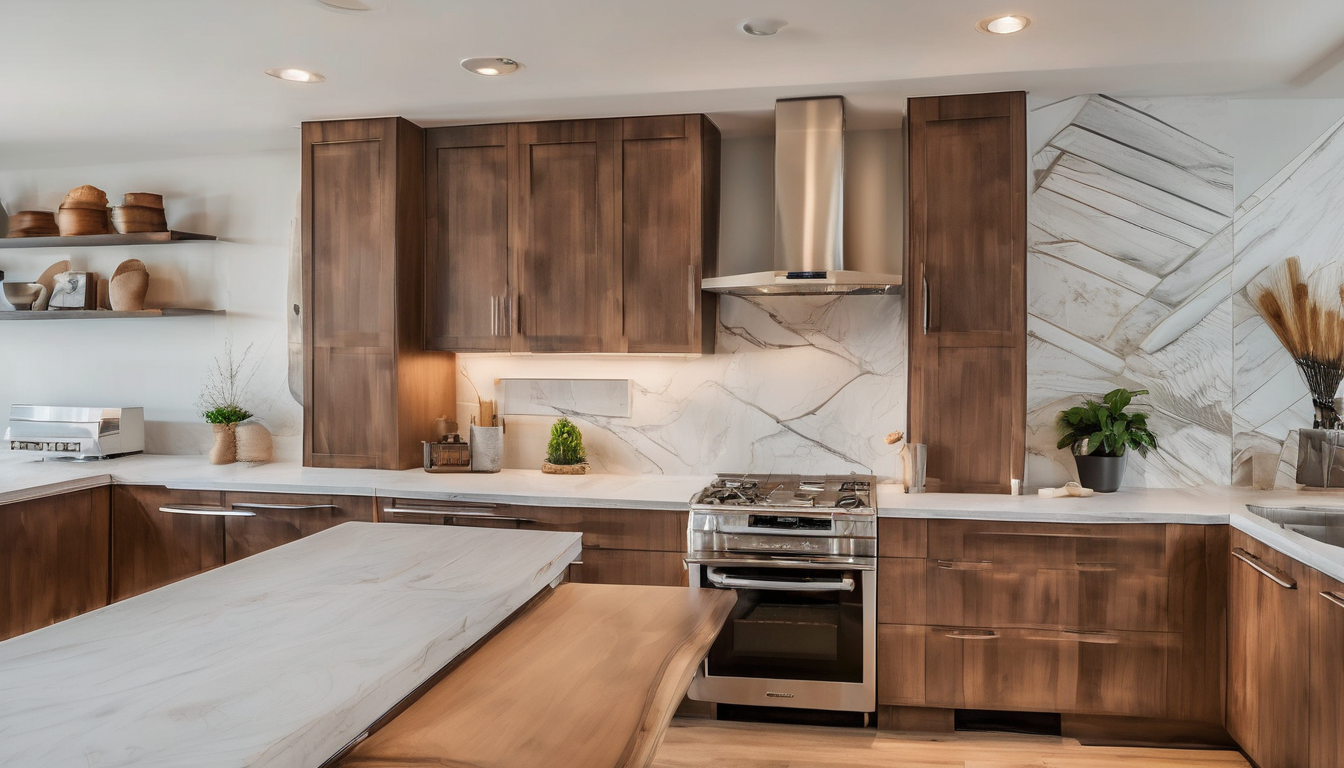

Wood veneer countertops and cabinetry offer a stunning, natural aesthetic combined with sustainable advantages and cost-effectiveness that make them popular choices for modern kitchens. However, the Impact of Kitchen environment on wood veneer longevity and performance is a crucial consideration for homeowners and carpenters alike. Kitchens are dynamic spaces subjected to fluctuating humidity, temperature variations, heat, steam, and daily wear — all factors that can affect veneer over time.
Understanding how seasons, environmental conditions, and kitchen activity influence the durability and appearance of wood veneers helps tailor protective strategies to extend their lifespan. This article delves deep into these influences, offering comprehensive insights backed by woodwork expertise to help you maintain and enjoy your wood veneer surfaces longer.
Understanding Impact of Kitchen Environment on Wood Veneer Longevity and Performance
The kitchen is a high-activity environment where wood veneer surfaces face unique challenges compared to other rooms. Unlike stable indoor areas, kitchens experience constant fluctuations in temperature and humidity from cooking, boiling water, dishwasher use, and cleaning routines. These variations can cause the thin wood veneer layer to expand, contract, or delaminate if not properly protected.
Additionally, wood veneer relies on a substrate such as MDF or particleboard, which can swell or deteriorate when exposed to excessive moisture. The impact of kitchen environment on wood veneer longevity and performance is therefore twofold: the veneer’s surface condition and the stability of its core material must both be preserved through environmental control and preventative care.
Ultimately, understanding these environmental factors allows better selection of veneer types, finishing methods, and ongoing maintenance practices suited to kitchen use.
Seasonal Effects on Wood Veneer in Kitchen Spaces
Winter: Dry Air and Heating
During cold winter months, indoor heating systems lower relative humidity levels, causing wood materials to dry out and contract. Wood veneer surfaces can experience minor shrinkage and develop fine cracks or checking if the air is excessively dry. This dryness may weaken adhesion at veneer edges, increasing the risk of lifting or peeling if other protective layers are compromised.
Spring and Autumn: Fluctuating Humidity
Spring and autumn bring variable humidity as outdoor conditions change. Kitchens frequently transition between moist and dry states—opening windows, use of humidifiers, or weather changes affect indoor air quality. These cyclic moisture fluctuations can stress veneer bonds and substrates, potentially leading to warping or swelling over time if not mitigated.
Summer: Heat and Elevated Moisture
Summer in many regions brings hot temperatures and higher humidity, which amplify moisture absorption in wood veneer. Kitchens especially accumulate steam from cooking activities. Sustained exposure to such a humid, warm environment without adequate ventilation can increase the risk of veneer swelling, bubbling, and fungal decay. This is why summer months require extra vigilance in ventilation and surface protection.
Seasonal Summary
The impact of kitchen environment on wood veneer longevity and performance varies distinctly across seasons. Dry winter air stresses the veneer by contracting wood fibers, while humid summer air causes expansion and potential water damage. Timely adjustment of humidity levels and temperature control aligned with the seasons significantly improve veneer durability.
Moisture and Humidity Impacts on Wood Veneer Performance
Moisture is the most critical enemy to wood veneer in kitchens due to its affinity for water absorption. When water penetrates the veneer surface or reaches the core substrate, obvious damage manifests as swelling, delamination, discoloration, and ultimately structural failure.
- Core substrate vulnerability: Engineered woods like MDF and particleboard swell and lose integrity when wet, exacerbating surface veneer problems.
- Vapor and condensation exposure: Areas near sinks or dishwashers are particularly at risk since steam and splashes continuously challenge the veneer’s protective finish.
- Humidity fluctuations: Frequent changes in indoor humidity levels cause wood fibers to expand and contract repeatedly, resulting in veneer fatigue and loosening.
Kitchens with poor ventilation, or lacking exhaust fans, see increased moisture accumulation, accelerating veneer deterioration. Conversely, kitchens with controlled humidity (ideally 40-60%) preserve veneer qualities by maintaining dimensional stability and finish integrity.
Heat and Steam Exposure Impact on Wood Veneer Longevity
Heat from stovetops, ovens, and hot cookware poses another challenge. Wood veneer is sensitive to prolonged heat exposure, which can dry out oils and finishes, leading to cracking or fading. Steam from boiling water or dishwashers similarly introduces moisture along with heat, complicating maintenance.
Frequent temperature spikes near these heat sources may weaken adhesion bonds in veneered surfaces or cause the finish to blister. To mitigate this, protective heat-resistant finishes and proper placement away from direct heat are essential.
Another consideration is UV exposure from kitchen windows, which can bleach or darken veneer surfaces unevenly. Using UV protective coatings helps maintain the veneer’s visual appeal and structural soundness over time.
Protective Sealing and Finishing Techniques for Kitchen Veneers
Effective sealing and finishing form the first line of defense against the impact of kitchen environment on wood veneer longevity and performance. Common approaches include:
- Polyurethane coatings: Oil-based or water-based sealants create a durable water-resistant barrier. Oil-based finishes offer deeper penetration and longer-lasting protection, while water-based finishes dry faster and emit fewer odors.
- Hard wax oils: Penetrate wood and harden to form a flexible but protective film suited for kitchen wear.
- Resin finishes: Provide a high-gloss, tough surface able to resist heat, moisture, and scratches effectively.
- Regular top-up treatments: Maintaining the finish with periodic reapplication of oils or waxes replenishes the protective layer and keeps veneer looking fresh.
Surface preparation before sealing — including sanding for smoothness and cleaning for contaminants — significantly improves sealant adherence and effectiveness. High-quality finishing reduces moisture ingress and heat damage, extending veneer usability even in demanding kitchens.
Regular Maintenance and Repair for Wood Veneer Kitchen Surfaces
Preventative maintenance greatly influences the impact of kitchen environment on wood veneer longevity and performance. Recommended practices include:
- Cleaning with gentle, non-abrasive cleaners: Avoid harsh chemicals or excess water, which degrade finish integrity.
- Immediate spill management: Wiping liquids quickly prevents absorption and watermarks.
- Using cutting boards and trivets: Minimizes direct knife marks and heat spots on the veneer surface.
- Periodic refinishing: Sanding down worn or scratched areas and reapplying sealants restores protective qualities.
- Monitoring humidity: Employ humidifiers or dehumidifiers as seasonal conditions demand to stabilize the kitchen environment.
Repairing minor veneer chips or lifts early with wood glue or filler reduces worsening damage and preserves structural integrity. A proactive care routine ultimately prolongs the veneer life cycle and aesthetic presence.
Comparing Wood Veneer to Other Kitchen Countertop Materials
When evaluating wood veneer’s suitability in the kitchen, it’s useful to consider alternatives like solid wood, laminate, or stone:
| Material | Durability | Maintenance | Cost | Environmental Impact |
|---|---|---|---|---|
| Wood Veneer | Moderate; dependent on environment and finish | Requires sealing and upkeep to resist moisture and heat | Cost-effective vs. solid wood | More sustainable; uses less hardwood |
| Solid Wood | Higher durability; may warp if untreated | Needs frequent maintenance and sealing | Higher initial cost | Uses more raw material |
| Laminate | High durability, especially against moisture and scratches | Low maintenance; easy cleaning | Generally affordable | Less eco-friendly; plastic-based |
| Stone (Granite, Quartz) | Very high durability; resistant to heat and moisture | Low but requires sealing for some stones | Expensive | High environmental cost to quarry |
Wood veneer offers a balance of natural beauty, cost, and environmental responsibility but demands closer attention to environmental influences than laminate or stone options, especially in kitchen environments.
Expert Tips for Maximizing Wood Veneer Longevity in Kitchen Environments
- Control kitchen humidity: Maintain 40-60% relative humidity using exhaust fans and climate devices to reduce veneer stress.
- Choose quality finishes: Opt for oil-based polyurethane or hard wax oil designed for kitchen wear.
- Limit direct heat and moisture exposure: Position wood veneer away from stovetops and sinks where possible.
- Seasonal care: Adjust moisture levels during dry winters and humid summers to stabilize veneer expansion and contraction cycles.
- Perform regular inspections: Quickly address chips, peeling, or finish wear before damage worsens.
- Use protective accessories: Trivets, coasters, and cutting boards reduce daily kitchen wear on the veneer surface.
By integrating these expert practices, homeowners and professionals can significantly enhance the durability and look of wood veneer countertops and cabinetry despite demanding kitchen environments.
The impact of kitchen environment on wood veneer longevity and performance is undeniable but manageable with informed design choices, quality materials, protective finishes, and tailored maintenance. Understanding seasonal challenges and consistent care routines transforms veneer surfaces into lasting kitchen assets that marry beauty with practical resilience.
