
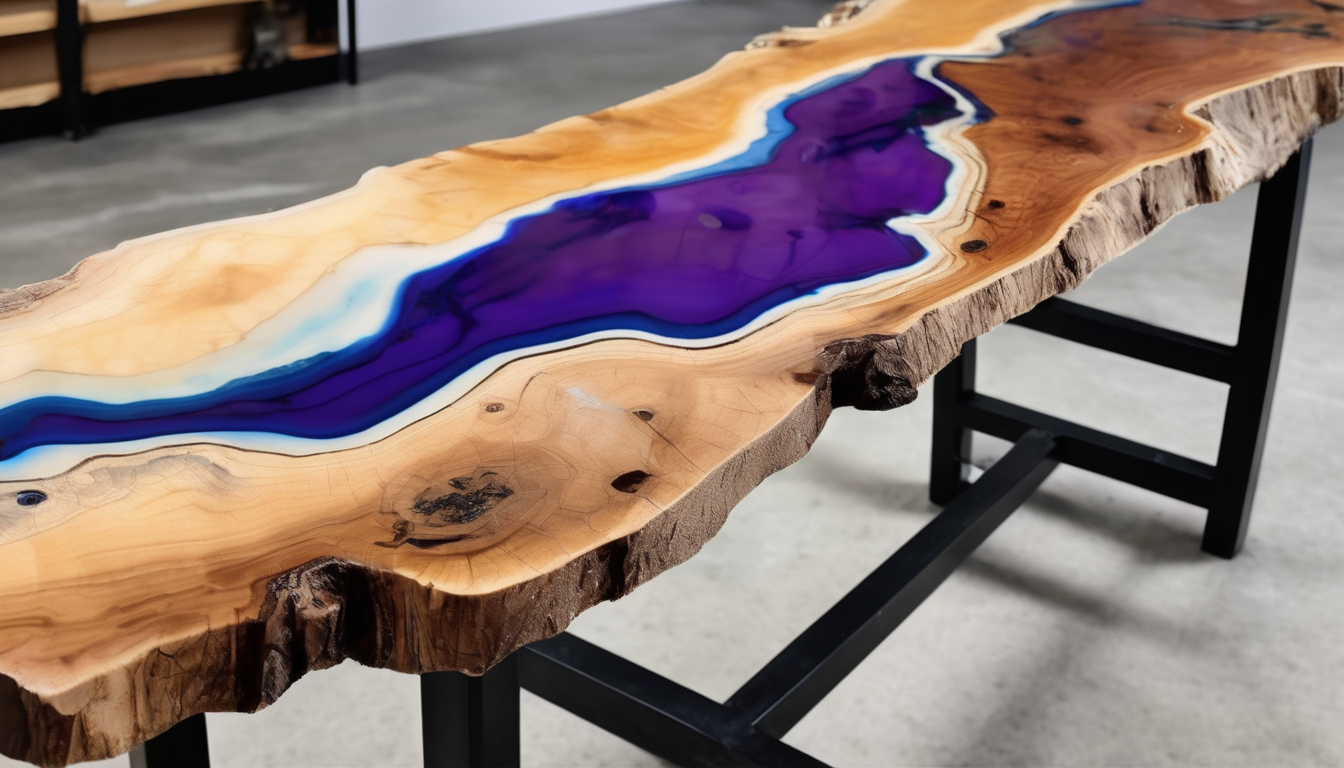

Introduction: Enhancing Live Edge Wood with Resin
When it comes to designing an eye-catching and functional space, one element that can make or break a room’s aesthetic is choosing the right materials. For those who love the natural beauty of live edge wood slabs, adding resin inlays can bring out the unique character and grain patterns of each piece while also enhancing its durability.
Understanding Choosing Resin Colors To Complement Live Edge Slabs is essential. However, selecting the perfect resin color to complement your live edge slab isn’t always straightforward. With so many shades and finishes available on the market today, it’s important to understand how different hues interact with natural wood tones and textures. This guide will walk you through five key considerations for choosing resin colors that enhance rather than overwhelm your live edge slabs.
Table of Contents
Choosing Resin Colors To Complement Live Edge Slabs – Understanding the Importance of Color Complementing Live Edg
Choosing a resin color that complements your live edge slab is crucial to achieving harmony in your design. The natural beauty of live edge wood lies in its unique grain patterns, knots, and character markings which tell the story of each tree’s growth over time. A well-chosen resin hue can enhance these features, drawing attention to their intricate details while also providing a protective layer against wear and tear.
However, selecting an inappropriate color could clash with the wood’s natural tones or obscure its distinctive characteristics, detracting from the overall appeal of your piece. To avoid this pitfall, it is essential to carefully consider how different resin shades interact with various types of live edge timber before making a decision.
Choosing Resin Colors To Complement Live Edge Slabs – Considering Grain Patterns and Character Markings
When selecting a resin color for your live edge slab, it’s important to take into account the specific grain patterns and character markings present in each piece. Different species of wood exhibit unique characteristics that can influence how well certain colors complement them.
For instance, oak tends to have open pores and a more pronounced grain pattern, which may benefit from lighter resin tones such as clear or pale grey to allow these features to remain visible. Conversely, walnut has rich dark hues with fine lines running through it; a darker resin like black or deep brown could help accentuate the wood’s natural beauty without overwhelming its intricate details. This relates directly to Choosing Resin Colors To Complement Live Edge Slabs.
Choosing Resin Colors To Complement Live Edge Slabs – Understanding the Effect of Light and Shadows on Color Perce
Lighting plays a significant role in how we perceive colors, especially when it comes to live edge slabs. The interaction between light sources and resin hues can drastically change the appearance of your piece depending on its placement within an interior space.
Natural daylight tends to highlight subtle variations in wood grain patterns while artificial lighting can create dramatic contrasts through shadow play. By understanding these effects, you can choose a resin color that enhances rather than detracts from the visual impact of your live edge slab under varying conditions throughout the day and night.
Matching Grain Patterns with Resin Inlays
To create a cohesive look between your live edge slab and its resin inlay, it’s essential to consider how different grain patterns interact. A well-thought-out design can draw the eye across both materials seamlessly while still allowing each one’s unique qualities to shine through.
When choosing a resin color for your live edge wood, think about whether you want to blend or contrast the two elements. For instance, using clear resin allows the natural beauty of the wood to remain unobstructed, whereas darker shades can add depth and richness to more subdued grain patterns. Experiment with different samples in situ before committing to a final choice. When considering Choosing Resin Colors To Complement Live Edge Slabs, this becomes clear.
Avoiding Common Mistakes and Tips for Successful Color Selection
Selecting the right resin color is both an art and a science, but there are several pitfalls you can avoid by following these tips:
1. Test Small Samples: Before committing to a large-scale application, test various shades on small sections of your live edge slab under different lighting conditions.
2. Consider Environmental Factors: Think about how the piece will be used and what kind of wear it might endure over time when selecting a resin color that offers durability as well as aesthetic appeal. The importance of Choosing Resin Colors To Complement Live Edge Slabs is evident here.
3. Look Beyond Color Cards: Color swatches often do not accurately represent the final result, so look at finished pieces for inspiration instead.
4. Work with a Professional: If you’re unsure about which direction to take, consult with an experienced craftsman who can offer expert guidance tailored specifically towards your project’s requirements. Understanding Choosing Resin Colors To Complement Live Edge Slabs helps with this aspect.
5. Embrace Contrast and Complementarity: Don’t be afraid to play around with contrasting colors if it enhances the overall look of your piece but make sure that any contrast does not overwhelm or detract from the natural beauty of the wood itself.
Case Study: The Live Edge Wood Slab Breakfast Bar by Earthy Timber with Resin Infill
A great example of how resin can enhance live edge wood is the Live Edge Wood Slab Breakfast Bar by Earthy® Timber. This piece features a beautifully crafted live edge walnut slab paired with sleek black resin inlays that highlight its rich grain patterns while adding modern flair.
The use of contrasting colors here serves to draw attention to the wood’s unique character markings without overwhelming them, creating an elegant and functional centerpiece for any kitchen or dining area. By carefully considering each element’s role within the overall design, this breakfast bar demonstrates how thoughtful color selection can elevate a live edge slab into a true work of art. Choosing Resin Colors To Complement Live Edge Slabs factors into this consideration.
Expert Tips for Choosing Resin Colors
To help you make informed decisions about your resin choices, here are some expert tips:
1. Understand the Wood Species: Each type of wood has its own unique grain pattern and characteristics. Knowing these details will guide your choice of resin color.
2. Consider Lighting Conditions: The way light interacts with different colors can significantly affect how they appear on your live edge slab. This relates directly to Choosing Resin Colors To Complement Live Edge Slabs.
3. Experiment Before Committing: Always test small samples before applying resin to large areas to ensure you achieve the desired effect.
4. Choose a Professional: Working alongside someone who has experience in both woodworking and resin application will give you invaluable insight into selecting the right colors for your project. When considering Choosing Resin Colors To Complement Live Edge Slabs, this becomes clear.
5. Balance Contrast with Harmony: While contrasting colors can be striking, finding harmony between wood and resin creates an aesthetically pleasing piece that showcases each material’s unique qualities.
FAQ: Frequently Asked Questions about Resin Colors
Here are some common questions homeowners have when choosing a resin color for their live edge slab:
1. What is the best way to test different resin colors?
– Test small samples on your actual wood under various lighting conditions before applying it throughout. The importance of Choosing Resin Colors To Complement Live Edge Slabs is evident here.
2. Can I use multiple resin colors in one piece?
– Yes, combining different hues can create striking contrasts or complementary tones that enhance the natural beauty of your live edge slab.
3. How does resin affect the durability and longevity of my wooden furniture?
– Properly applied resin acts as a protective layer against moisture damage, scratches, and wear over time. Understanding Choosing Resin Colors To Complement Live Edge Slabs helps with this aspect.
4. What should I consider when choosing between clear and tinted resins?
– Clear resin allows wood grain patterns to remain visible while offering protection. Tinted resins can highlight specific areas or add depth but may obscure natural details if not chosen carefully.
5. Are there any maintenance requirements for resin-filled live edge furniture?
– Regular dusting and occasional cleaning with mild soap solutions are sufficient to maintain the beauty of your piece over time. Choosing Resin Colors To Complement Live Edge Slabs factors into this consideration.
Conclusion: Elevate Your Live Edge Slab with Carefully Chosen Resin Colors
Choosing the right resin color to complement your live edge slab is a crucial step in creating a stunning and functional centerpiece for any home. By understanding how different hues interact with wood grain patterns, considering environmental factors such as lighting conditions, and testing samples before committing, you can select colors that enhance rather than detract from the natural beauty of each piece.
Whether you opt for clear resin to allow wooden details to shine through or choose a contrasting shade to add depth and richness, thoughtful consideration will ensure your live edge wood slab becomes a cherished focal point in any room. With these tips in mind, you’re well on your way to crafting a unique and beautiful addition to your home. Understanding Choosing Resin Colors To Complement Live Edge Slabs is key to success in this area.
