
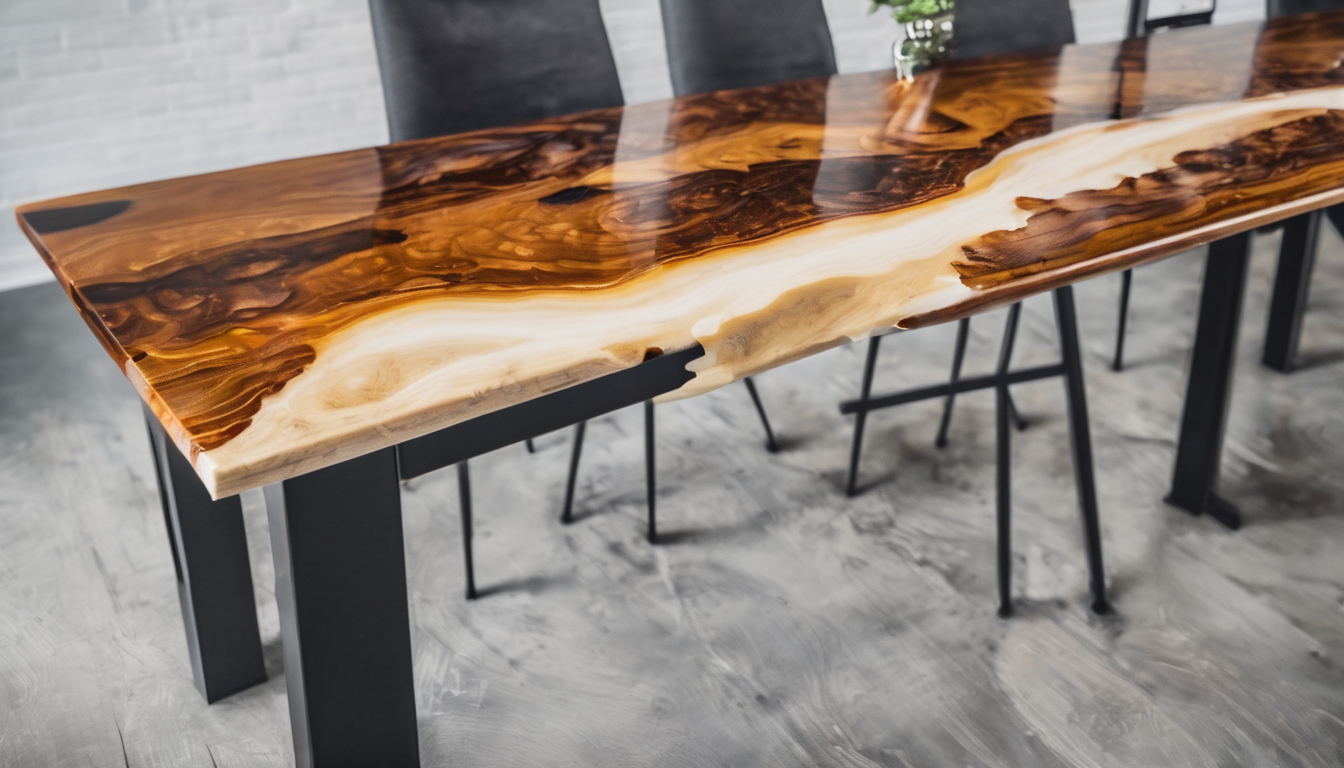

Working on a river table is exciting, but many makers encounter the same pitfalls: bubbles, adhesion failures, sticky or yellowed resin and warped slabs. This article covers Common Epoxy Mistakes in River Table Builds and Fixes, explains why they happen, and gives practical, localised solutions you can use in Bristol, Cornwall and across the South West to rescue or prevent a costly fail.
Understanding Common Epoxy Mistakes in River Table Builds and Fixes
Before diving into solutions, recognise the pattern: most failures are chemical or physical—moisture, incorrect stoichiometry, thermal runaway, contamination or poor mechanical support. Knowing the root cause makes the fix predictable and repeatable when you build or repair river tables in Bristol, Bath or nearby counties. This relates directly to Common Epoxy Mistakes In River Table Builds And Fixes.
Common Epoxy Mistakes In River Table Builds And Fixes – Mistake 1 — Moisture and Wet Timber
Problem: Epoxy that cures but later cracks, delaminates or goes cloudy is often reacting to moisture trapped in the slab or timber that moves after sealing. Live-edge slabs sold locally can carry internal moisture even if the surface feels dry. When considering Common Epoxy Mistakes In River Table Builds And Fixes, this becomes clear.
Why it happens
Wood with elevated moisture content outgasses and shrinks as it dries or moves with seasonal humidity, creating voids under the epoxy or stressing the cured resin. The importance of Common Epoxy Mistakes In River Table Builds And Fixes is evident here.
Fixes and prevention
- Measure moisture content with a pin-type and an infra‑red or capacitance meter to verify core moisture below about 12% before pouring for a stable result; aim for under 10% for critical pieces.
- Dry slabs properly: kiln drying is ideal, but you can stack with spacers and run controlled heat and airflow in a workshop for weeks depending on thickness.
- If you must build with borderline timber, use a flexible seal coat (thin epoxy primer or specialised wood sealer) and plan for layered pours to allow movement.
- When repairing, remove loose resin and re-seal wood after stabilising moisture. For serious movement, splice in new timber or use mechanical fixes (screws, hidden support) before re-pouring.
Common Epoxy Mistakes In River Table Builds And Fixes – Mistake 2 — Wrong Mix Ratio or Inadequate Mixing
Problem: Sticky or soft cured epoxy, tacky patches, or uneven cure across the river.
Why it happens
Epoxies are two-part systems that require precise volume mixing and thorough integration of resin and hardener. Under‑ or over‑measuring, or leaving unmixed resin on bucket walls, prevents correct polymerisation. Understanding Common Epoxy Mistakes In River Table Builds And Fixes helps with this aspect.
Fixes and prevention
- Always follow the manufacturer’s ratio by volume or weight exactly — some industry resins use 2:1, others 1:1 or different ratios. Check temperature‑dependent pot life notes.
- Use calibrated mixing vessels and digital scales; measure by weight when possible for highest accuracy.
- Mix slowly and scrape sides/bottom for a full 3–5 minutes; avoid whipping air. Transfer to a clean mixing bucket and re-mix before pouring.
- If partially cured sticky areas appear, post‑cure with heat (if manufacturer allows) or sand and recoat with a properly mixed batch once contamination is removed.
Mistake 3 — Poor Sealing and Saturation of Wood
Problem: Wood soaks epoxy unevenly, causing pits, sinkage, or discolouration where sapwood and end grain draw resin away from the river. Common Epoxy Mistakes In River Table Builds And Fixes factors into this consideration.
Why it happens
Open pores, sapwood and end grain act like sponges. Without a proper seal coat, the main pour loses volume into the timber and levels sit low in patches. This relates directly to Common Epoxy Mistakes In River Table Builds And Fixes.
Fixes and prevention
- Seal wood with a thin, well-mixed epoxy “seal coat” (flood coat) before main pour. Use a 1–2 mm film coat, not a full structural pour.
- For very porous or spalted timber, pre-wet with diluted resin or apply a low viscosity penetrating epoxy first to consolidate fibres and prevent pinholes.
- Clamp and clamp‑glue any gaps or bark inclusions so resin won’t be sucked away mid-pour.
- When fixing an existing table with low spots, grind the river surface until you hit solid cured resin, clean thoroughly, then apply a seal coat before topping up.
Mistake 4 — Bubbles and Trapped Air
Problem: Tiny “acne” bubbles or larger air pockets trapped beneath the surface ruin clarity and finish.
Why it happens
Bubbles form from mixed air, vapour from wood, or trapped cavities. Fast pours and high-viscosity mixes trap bubbles; stirring too vigorously creates microbubbles that can’t escape in deep pours. When considering Common Epoxy Mistakes In River Table Builds And Fixes, this becomes clear.
Fixes and prevention
- Mix slowly to reduce entrained air, and let the mix rest 5–15 minutes (according to pot life) to allow bubbles to rise and collapse before pouring.
- Use a heat gun or propane/nitrogen torch to pass over the surface shortly after pouring to pop surface bubbles; work in thin passes and keep the flame moving to avoid burning the resin or wood.
- For deep pours, layer the pour into 5–25 mm flood coats depending on your epoxy’s maximum single pour depth; torch or vacuum each layer as advised.
- Vacuum degassing the mixed epoxy or pressure casting small embedded objects is an option in well‑equipped workshops; otherwise lean on slow mixing and good torching.
Mistake 5 — Heat Management and Exotherm Problems
Problem: A hot, fast cure that yellows, smokes, cracks, or causes the resin to brown the wood or crack the mould. The importance of Common Epoxy Mistakes In River Table Builds And Fixes is evident here.
Why it happens
Large volumes produce exothermic heat during cure; rapid heat can cause the epoxy to overheat, yellow or even pop off from the wood due to differential thermal expansion. Understanding Common Epoxy Mistakes In River Table Builds And Fixes helps with this aspect.
Fixes and prevention
- Calculate your pour volume and check the epoxy’s pot life and maximum pour thickness. For large volumes, use a slow‑reacting structural epoxy or pour in multiple thin layers.
- Work in a controlled workshop at recommended temperature (typically 18–25°C). Cooler ambient temperatures extend pot life and reduce exotherm risk; avoid direct sunlight.
- If a batch overheats during cure, move the piece to a cooler area and reduce ambient temperature; if heat caused a chemical failure (charring, heavy yellowing), cut back to sound material and re‑pour with lower heat approach.
Mistake 6 — Levelling, Mould Leaks and Structural Support
Problem: Epoxy runs out of the form, or cured surface is wavy, and wood twists after cure causing separation from a metal base. Common Epoxy Mistakes In River Table Builds And Fixes factors into this consideration.
Why it happens
Poorly built moulds leak at corners or screw holes; an unleveled table makes epoxy pool in low spots; unsupported slabs can twist as internal stresses change. This relates directly to Common Epoxy Mistakes In River Table Builds And Fixes.
Fixes and prevention
- Build a reliable mould using plywood/MDF sealed with tape and silicone or use purpose-made form tape and polyurethane sealant—test the mould with water or a thin epoxy run first.
- Clamp and screw wood blanks to the base of the mould or use internal weights and temporary glue blocks to prevent floating during pour.
- Level the mould perfectly with a digital spirit level across the entire length; small angles make large depth differences across a table metre-long slab.
- Design a stout support structure: use steel or heavy hardwood subframes to resist timber movement. If repairing, add discreet steel plates or resin‑bonded battens to restrain warped sections.
How to Choose the Best Epoxy for a River Table Project
Question: What brand of epoxy is best? Answer: choose based on intended pour depth, UV stability, clarity, viscosity and working time rather than brand alone. When considering Common Epoxy Mistakes In River Table Builds And Fixes, this becomes clear.
- For deep pours (over 10–15 mm per layer) choose a structural epoxy formulated for deep pours with long pot life and low exotherm.
- For crystal clear surfaces and good UV resistance, select a resin with added UV stabilisers or plan a clear topcoat epoxy with enhanced UV resistance.
- Popular, professionally regarded options include specialist table/resin systems from established suppliers — evaluate technical data sheets for maximum single pour thickness, hardness (Shore D/A) and recommended temperatures before buying.
- Buy from reputable UK suppliers with local technical support and buy sample kits for trial pours before committing to a large £1,000+ purchase for the main build.
How to Prepare Timber Slabs for Epoxy River Tables
Good preparation prevents most problems. Steps I use in my Bristol workshop:
- Inspect slab for rot, insect damage and deep checks; splice in sound timber or fill with epoxy after consolidation where structural integrity is preserved.
- Flatten and mill mating faces; ensure the live edge gaps are consistent. Use straight edges and winding sticks to check twist.
- Dry and measure moisture content across the slab; sticker stack slabs for additional drying if needed.
- Seal end grain and open pores with a penetrating consolidant or thinned epoxy before building the form.
- Clean thoroughly — vacuum, wipe with acetone where necessary — and remove dust before seal coats.
Best Epoxy Pouring Techniques for Flawless River Tables
Layering, patience and temperature control are the craftsman’s allies.
- Plan small, consistent pour volumes. For many epoxies flood 5–20 mm per layer; check TDS for your selected resin.
- Work at 18–22°C for predictable viscosity. Warmer temperatures shorten pot life and increase bubble escape but raise exotherm risk.
- Use a slow, steady pour from a low height to reduce splash and entrained air.
- Torch each layer lightly to pop surface bubbles; allow sufficient cure time between layers to avoid trapping uncured resin beneath a cured skin.
- Finish with a thin final topcoat (2–3 mm) for a glassy surface; sand and polish with progressive grits to mirror finish.
Expert Tips & Key Takeaways
- Measure moisture and temperature: under 12% MC and 18–22°C workshop temperature are practical targets.
- Mix precisely and slowly; always scrape and re-mix in a fresh bucket before pouring.
- Seal porous wood first; treat spalted or punky areas with penetrating consolidant.
- Pour in controlled layers rather than one massive pour to avoid exotherm and bubbles.
- Test your chosen epoxy with a small mock-up pour using your timber to check discolouration and adhesion before the full job.
Conclusion
Most failures in river table projects trace back to a few repeatable mistakes: moisture, mixing, sealing, bubbles, heat and poor form/support. Tackle these systematically—measure, test, seal, layer and support—and you’ll significantly reduce rework and costly fixes on projects across Bristol, Somerset and beyond.
If you want, I can recommend specific UK suppliers and product datasheets, or draft a step‑by‑step checklist tailored to your slab dimensions and the epoxy brand you plan to use. Understanding Common Epoxy Mistakes In River Table Builds And Fixes is key to success in this area.
