
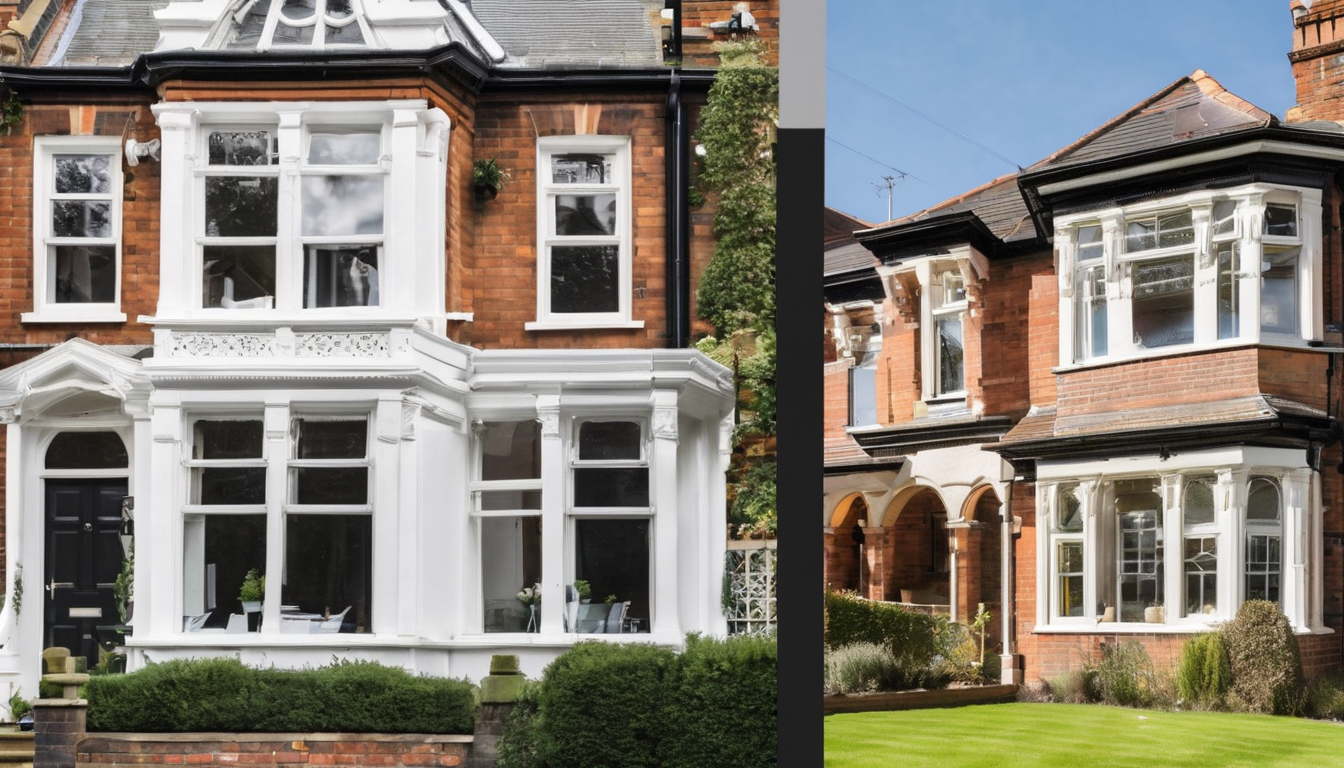

Choosing between an Edwardian property and a modern build often comes down to balancing character with convenience. This Edwardian Property Features vs Modern Builds Comparison dives deep into their key differences, tailored for homeowners in Bristol, Somerset, and surrounding areas like Gloucestershire and Wiltshire. Edwardian homes (built 1901-1910) bring elegant spaciousness, while modern builds (post-2000) emphasise efficiency and open layouts.
In Bristol’s leafy suburbs such as Redland or Westbury-on-Trym, Edwardian terraces with red brick and bay windows remain popular. Modern developments in areas like Bower Ashton offer sleek designs but lack historical charm. This comparison highlights pros, cons, and practical insights to guide your decision.
Edwardian Property Features vs Modern Builds Comparison: Architectural Overview
Edwardian properties typically feature red brick facades, often with white-painted woodwork and porches framed in timber[1][4]. They were built in straight lines on spacious plots, allowing front gardens and setbacks from the pavement—ideal for privacy in Bristol’s Clifton or Cornwall’s coastal towns[2]. Modern builds, by contrast, use brick, render, or cladding with minimalist lines and integrated garages.
In this Edwardian Property Features vs Modern Builds Comparison, Edwardians win on curb appeal with mock-Tudor elements or ornate porches[2][7]. Modern homes prioritise functionality, often lacking distinct entrances. Edwardian homes spread outwards, creating wider footprints over two storeys, unlike taller Victorian predecessors[1][3].
Exterior Materials
Edwardian red brick endures Bristol’s damp climate well, though repointing costs £5,000-£10,000 for a terrace[4]. Modern builds use cavity wall insulation from the start, reducing long-term issues.
Understanding Edwardian Property Features vs Modern Builds Comparison: Room Layouts
Edwardian interiors boast wide hallways, brighter rooms, and high ceilings for airy feel[1][3]. In Gloucestershire semis, these layouts suit families without servant quarters, unlike Victorian cellars[2]. Modern open-plan kitchens-diners flow seamlessly, appealing to young families in Swindon new builds.
This Edwardian Property Features vs Modern Builds Comparison shows Edwardians with separate rooms—living, dining, reception—preserving privacy[4]. Modern designs merge spaces for social living but can feel echoey. Edwardian staircases are grand focal points, often with parquet floors[3].
Space Utilisation
Edwardians average 1,200-1,800 sq ft with gardens; moderns match this but add en-suites[1]. In Dorset, Edwardian extensions are common for lofts.
Edwardian Property Features vs Modern Builds Comparison: Windows and Light
Bay windows and larger glazing flood Edwardian rooms with light, cheaper post-industrial revolution[3][4]. Stained glass adds elegance, seen in Exeter Edwardians[2]. Modern uPVC double-glazed units offer superior insulation (U-value 1.4 W/m²K vs Edwardian’s 5.0+)[3].
In Edwardian Property Features vs Modern Builds Comparison, Edwardians provide natural charm but draughts; retrofitting double glazing costs £4,000-£8,000[4]. Modern slimline frames mimic period style while saving £300/year on bills.
Edwardian Property Features vs Modern Builds Comparison: Roofs and Lofts
Steep-pitched Edwardian roofs with slate or ceramic tiles suit loft conversions, common in Bristol terraced homes[7][9]. Gable ends and dormers with bargeboards add character[7]. Modern trussed roofs prioritise speed, limiting loft space without reinforcement (£3,000-£6,000)[1].
Edwardians in Plymouth often have chimneys mid-roof for room fireplaces[9]. This Edwardian Property Features vs Modern Builds Comparison favours Edwardians for conversion potential, adding 30% value.
Loft Conversion Feasibility
As a Bristol carpenter, I’ve strengthened many Edwardian lofts for habitable use, unlike rigid modern trusses.
Edwardian Property Features vs Modern Builds Comparison: Decorative Details
Edwardians shine with parquet floors, ornate architraves, skirtings, and tiled hallways—no carpets favoured wood and ceramics[1][3]. Mock-Tudor cladding and fretwork porches define Bournemouth Edwardians[2]. Moderns use laminate or engineered wood, lacking handmade finesse.
Restoring Edwardian plasterwork or sash windows costs £2,000-£5,000 but boosts appeal[4]. In this Edwardian Property Features vs Modern Builds Comparison, details like these create heirloom quality.
Edwardian Property Features vs Modern Builds Comparison: Energy Efficiency
Modern builds meet EPC C+ standards with insulation, heat pumps, and solar-ready roofs—running costs £1,200/year vs Edwardian’s £2,500[3]. Edwardians leak heat via single-glaze and solid walls.
Upgrading Edwardians with cavity wall insulation (£4,000) and boilers yields 40% savings. Edwardian Property Features vs Modern Builds Comparison notes moderns excel here, vital in Somerset’s wet winters.
Insulation Retrofitting
Spray foam suits Edwardian lofts; I’ve installed it without losing headroom.
Edwardian Property Features vs Modern Builds Comparison: Maintenance and Costs
Edwardians demand rot repairs (£1,500/beam), rewiring (£4,000), and plumbing updates[4]. Modern NHBC warranties cover 10 years, minimising surprises.
In Cheltenham, Edwardian surveys reveal £10,000-£20,000 defects; moderns average £5,000. This Edwardian Property Features vs Modern Builds Comparison weighs character against hassle.
Edwardian Property Features vs Modern Builds Comparison: Pros and Cons Table
| Aspect | Edwardian Pros | Edwardian Cons | Modern Pros | Modern Cons |
|---|---|---|---|---|
| Layout | Spacious, bright rooms[1] | Separate spaces limit flow | Open-plan versatility | Lacks privacy |
| Windows | Ample natural light[3] | Draughty, costly upgrades | Energy-efficient glazing | Less character |
| Roofs | Conversion-friendly[7] | Tile replacements £5k+ | Low-maintenance | Truss limitations |
| Efficiency | Restorable charm | High bills pre-upgrade | Low running costs | Generic design |
| Costs | Value appreciation | Ongoing maintenance | Warranty peace | Higher buy-in |
Expert Tips for Edwardian Property Features vs Modern Builds Comparison
- Get a Level 3 survey for Edwardians in Wiltshire—uncover timber rot early.
- Budget £15,000-£30,000 for Edwardian modernisations like electrics and insulation.
- For moderns in Gloucester, check build quality; some post-2008 rushed jobs crack.
- Incorporate resin repairs for Edwardian floors—durable and aesthetic, as in my Bristol projects.
- Loft conversions add £50,000 value to Edwardians; moderns rarely need them.
Verdict on Edwardian Property Features vs Modern Builds Comparison
For growing families in Bristol or Somerset, Edwardians offer unbeatable character and space if you’re renovation-savvy—pros outweigh cons with proper surveys. Modern builds suit low-maintenance seekers in Exeter or Swindon, prioritising efficiency. Ultimately, in this Edwardian Property Features vs Modern Builds Comparison, Edwardians edge out for long-term value in the South West, blending history with modern upgrades.
Reference these for deeper research: Period Mouldings blog on Edwardian features[1], Flettons guide to buying Edwardians[4], and Strutt & Parker on architecture[5]. Understanding Edwardian Property Features Vs Modern Builds Comparison is key to success in this area.
